Why HVAC mold is a serious problem in Haines City
Haines City homeowners run their AC systems year-round. The evaporator coil inside your air handler runs cold, causing moisture to condense and drip into the drain pan. When that drain pan gets clogged or the drain line backs up, standing water accumulates inside the air handler. Mold grows within 24 to 48 hours.
Your AC system then circulates mold spores through every room in the house. The musty smell you notice when the AC kicks on is a strong sign of HVAC mold. After Hurricane Ian, Polk County residents reported mold growing inside their AC returns within weeks of initial flooding — the flood water entered the air handler through the return duct.
Signs of mold in your HVAC system
- Musty or earthy smell when the AC turns on
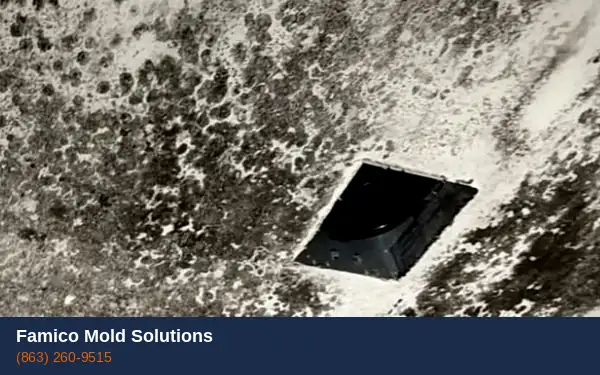
- Visible dark spots around supply vents or on vent covers
- Allergy or respiratory symptoms that worsen at home and improve outside
- Visible growth inside the air handler or on the evaporator coil
- Standing water in the drain pan under the air handler
- Children or elderly family members experiencing unexplained respiratory symptoms
What HVAC mold removal includes
We inspect the entire HVAC system — air handler, evaporator coil, drain pan, drain line, return ducts, supply ducts, and all supply vents. Air sampling at the supply vents gives us a spore count before we start. We clean the air handler and drain pan, treat the evaporator coil with EPA-approved antimicrobial solution, clean or replace affected duct sections, and flush the drain line. A final air sample at the supply vents confirms clearance after the job.
The most common mold species we find inside Haines City HVAC systems are Cladosporium and Penicillium. Both are common indoor molds that thrive in the cool, moist environment inside air handlers. Both affect indoor air quality and cause respiratory irritation with prolonged exposure.
Preventing HVAC mold in Florida
After we remove existing HVAC mold, we explain the steps to prevent it from returning — keeping the drain pan clean and the drain line flushed, changing filters regularly, maintaining proper drain slope, and scheduling annual coil inspections. Florida's humidity makes these maintenance steps more important than in drier climates.